We Contain Multitudes, Dundee Contemporary Arts, 7 February—26 April 2026
Artists: Andrew Gannon, Daisy Lafarge, Nnena Kalu and Jo Longhurst.
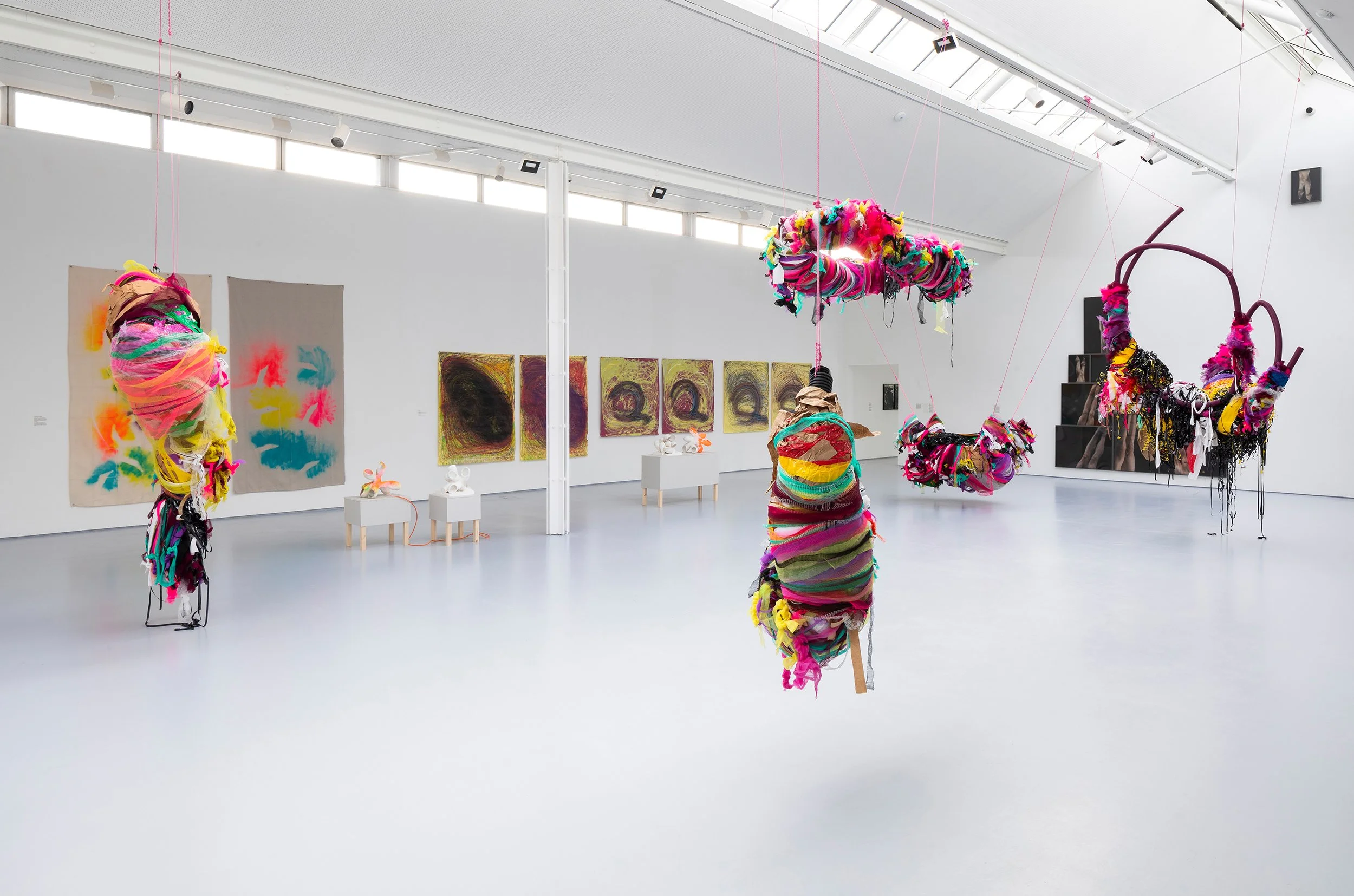
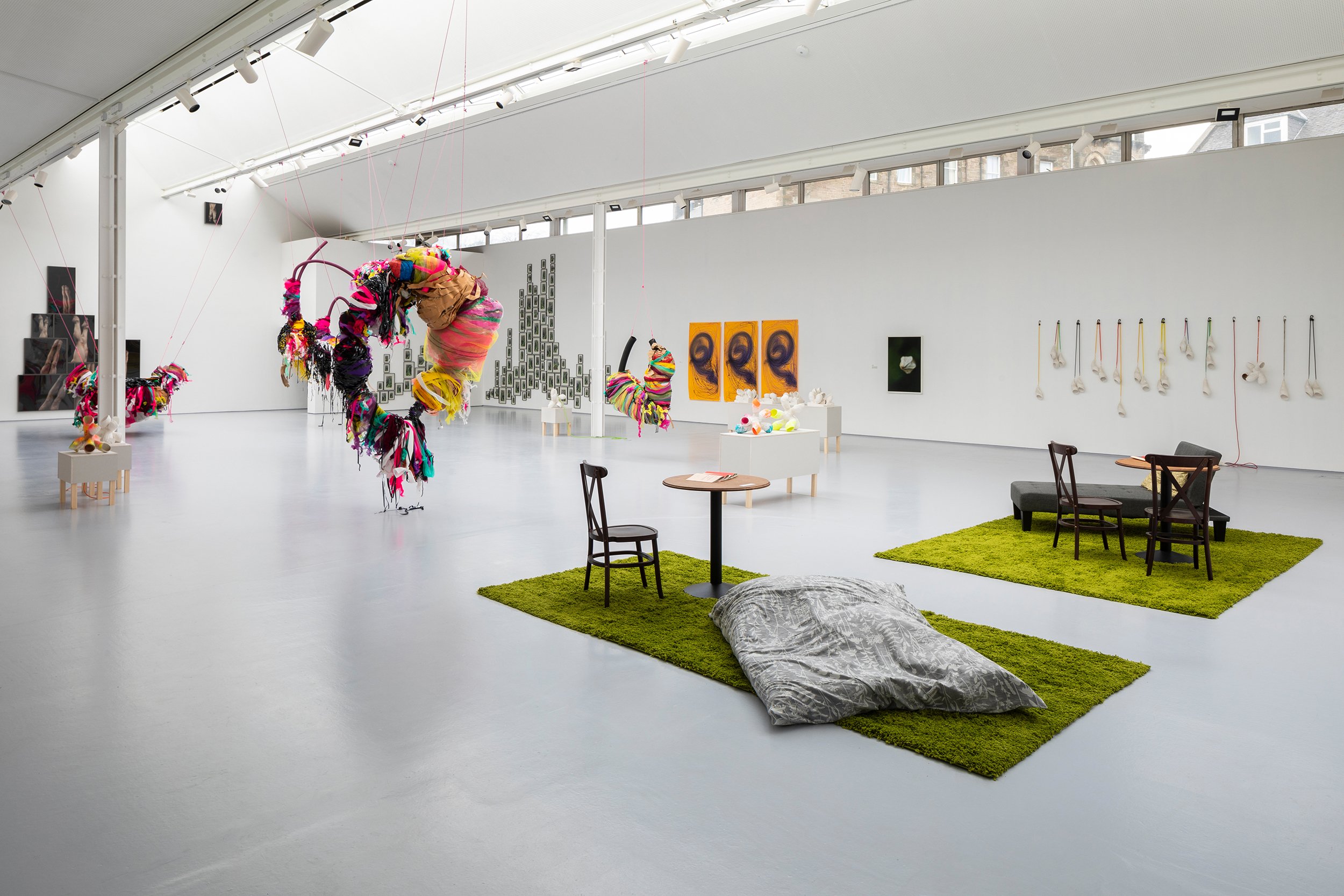
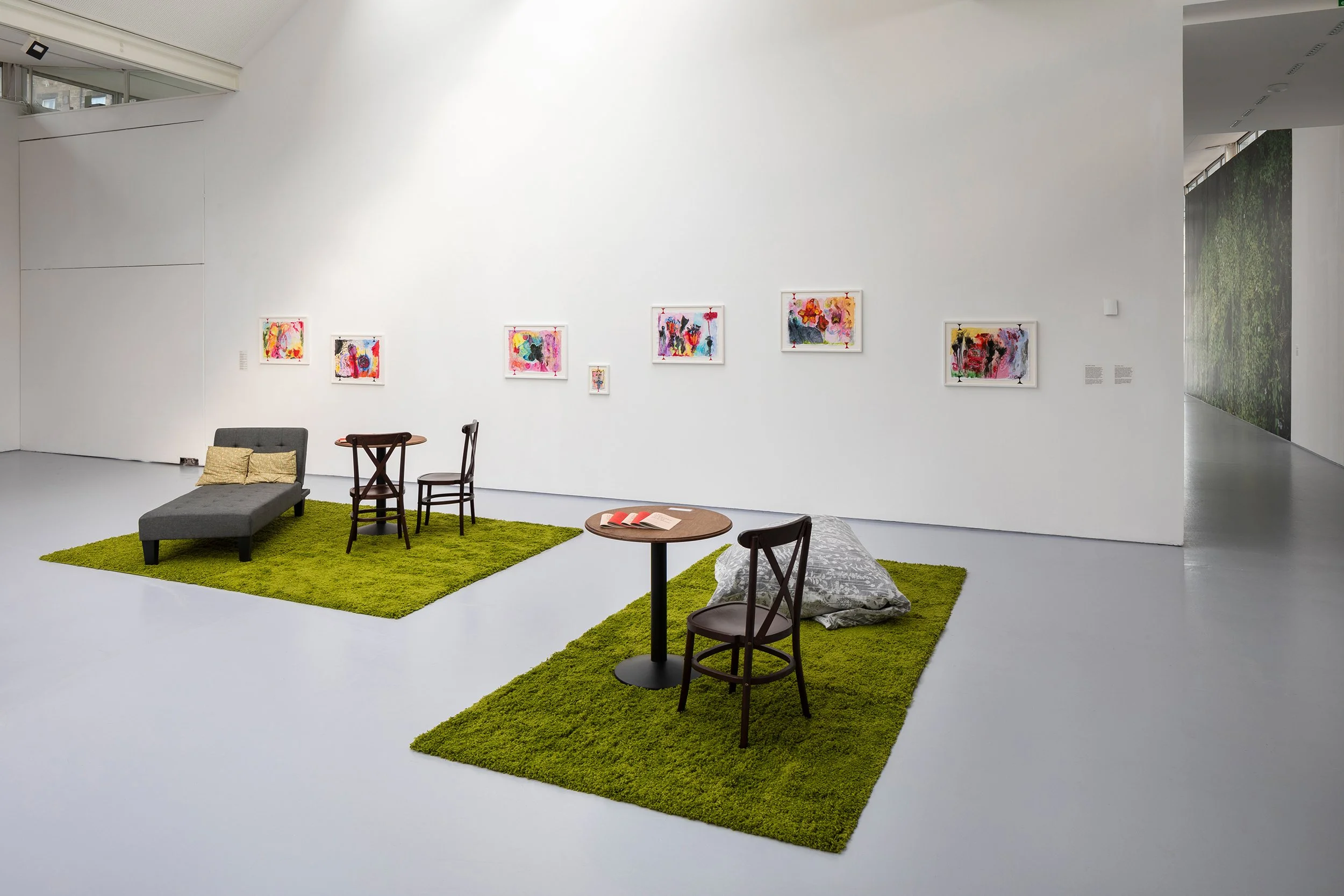
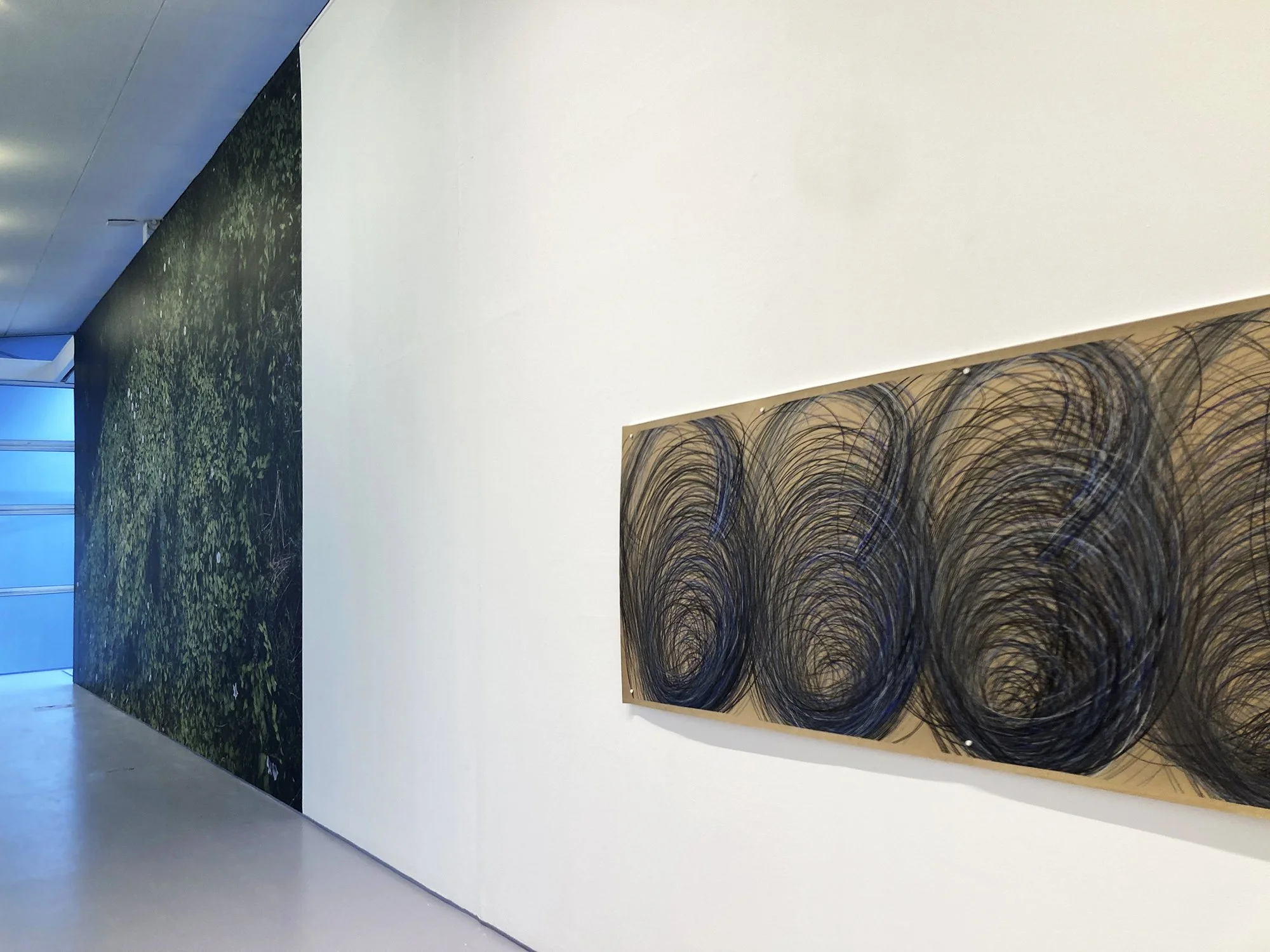
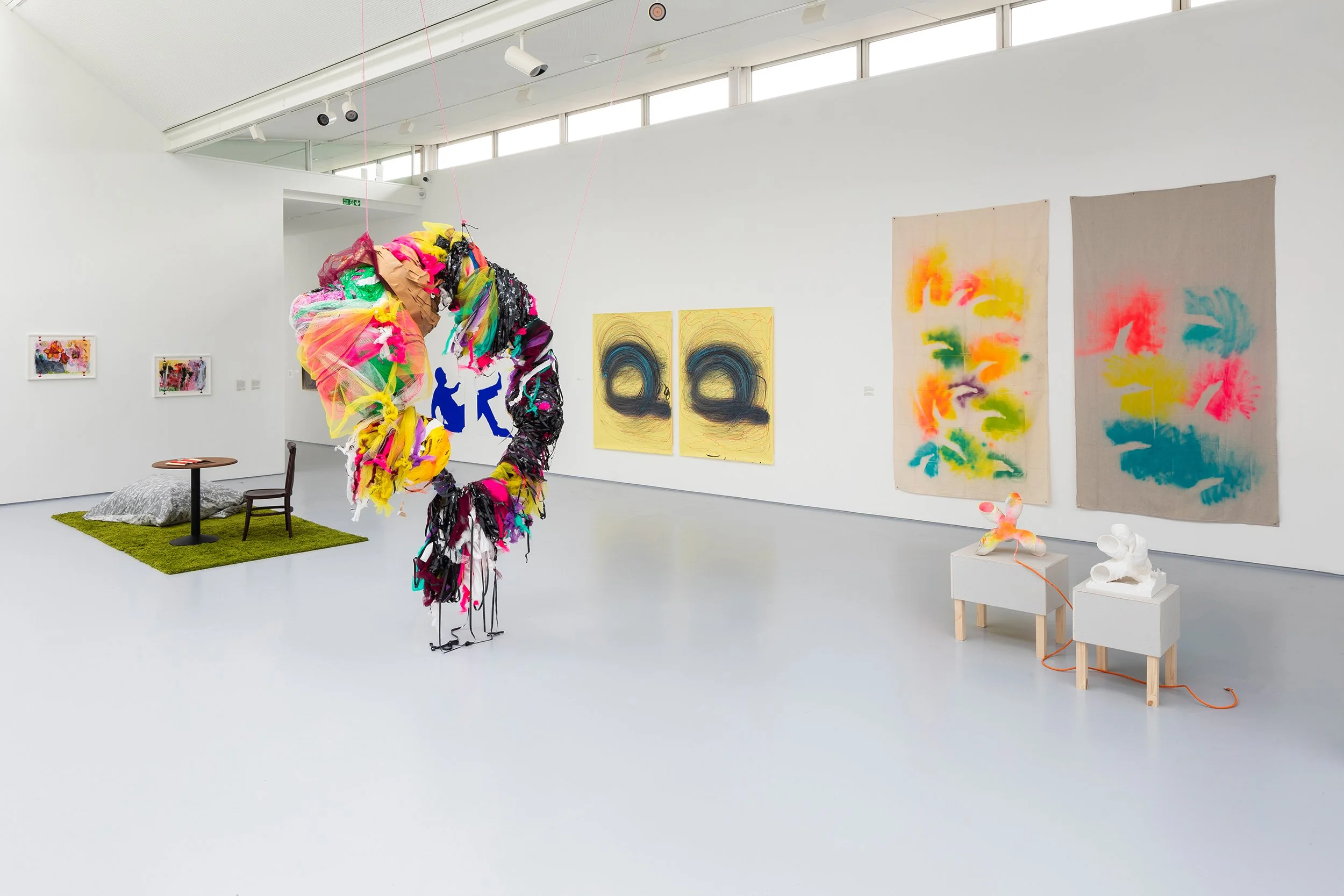
Works in sculpture, drawing, painting, photography and moving image fill both galleries at DCA, bringing together four artists whose practices are shaped by the body—its gestures, limits, and lived realities. There are many points of connection between the artists as they explore envelopment, enclosure, surrounding and restriction. Both Gannon and Kalu’s sculptures emerge through acts of binding, pleating, and layering — gestures that are echoed, both literally and metaphorically, in Longhurst’s appropriation and manipulation of bindweed and Lafarge’s use of kinesiology tape. Kalu’s drawings are records of movement; explorations of space defined by the length and reach of her arms. Lafarge’s paintings are made on the floor, in moments of waiting — for pain to subside or bureaucracy to respond. The exhibition presents a beautiful, poignant, and quietly political collection of work created by artists with different disabilities. Each artist offers a distinct yet resonant perspective, drawing on personal experience to create work that is both powerful and deeply reflective of their interactions with the world around them.
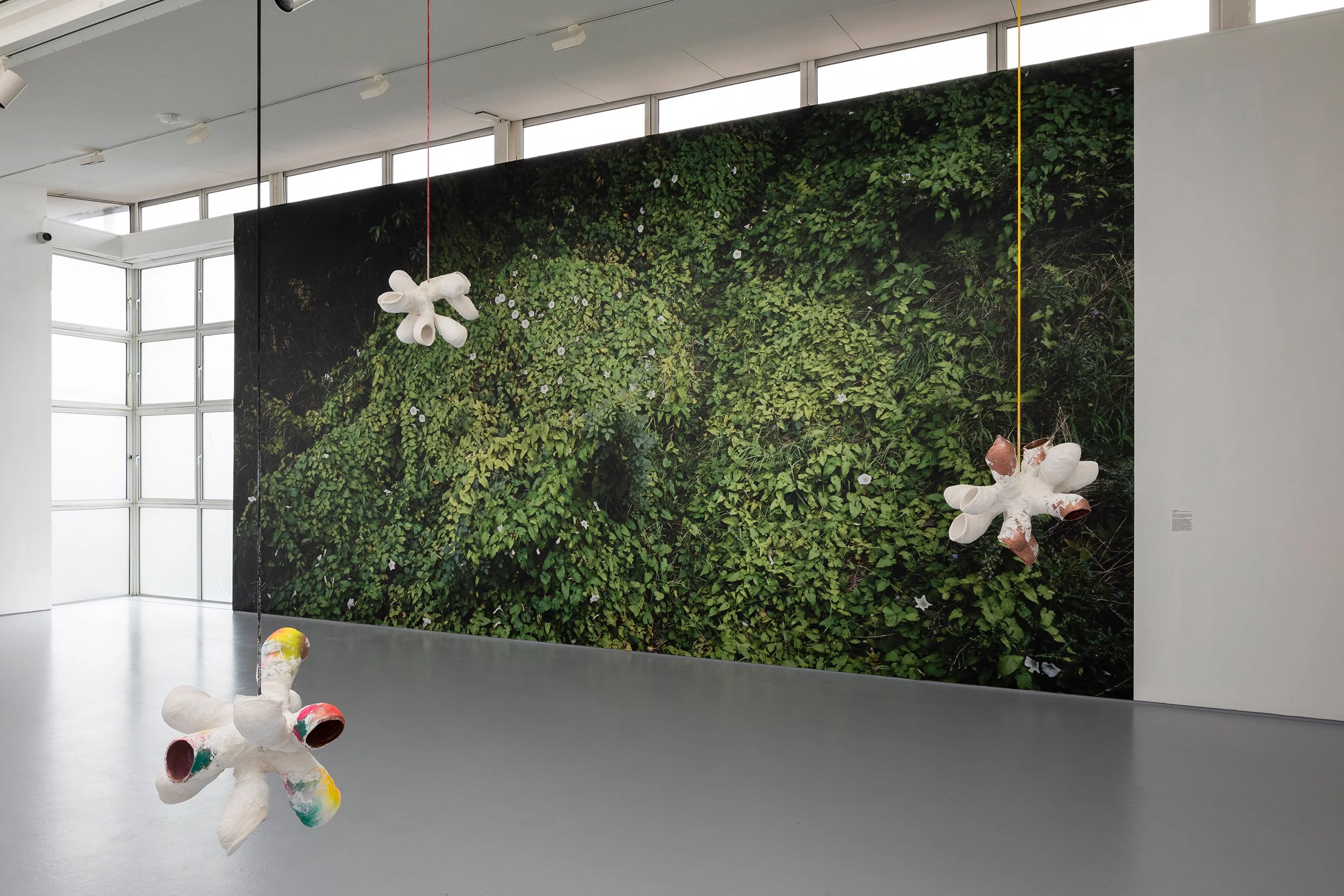
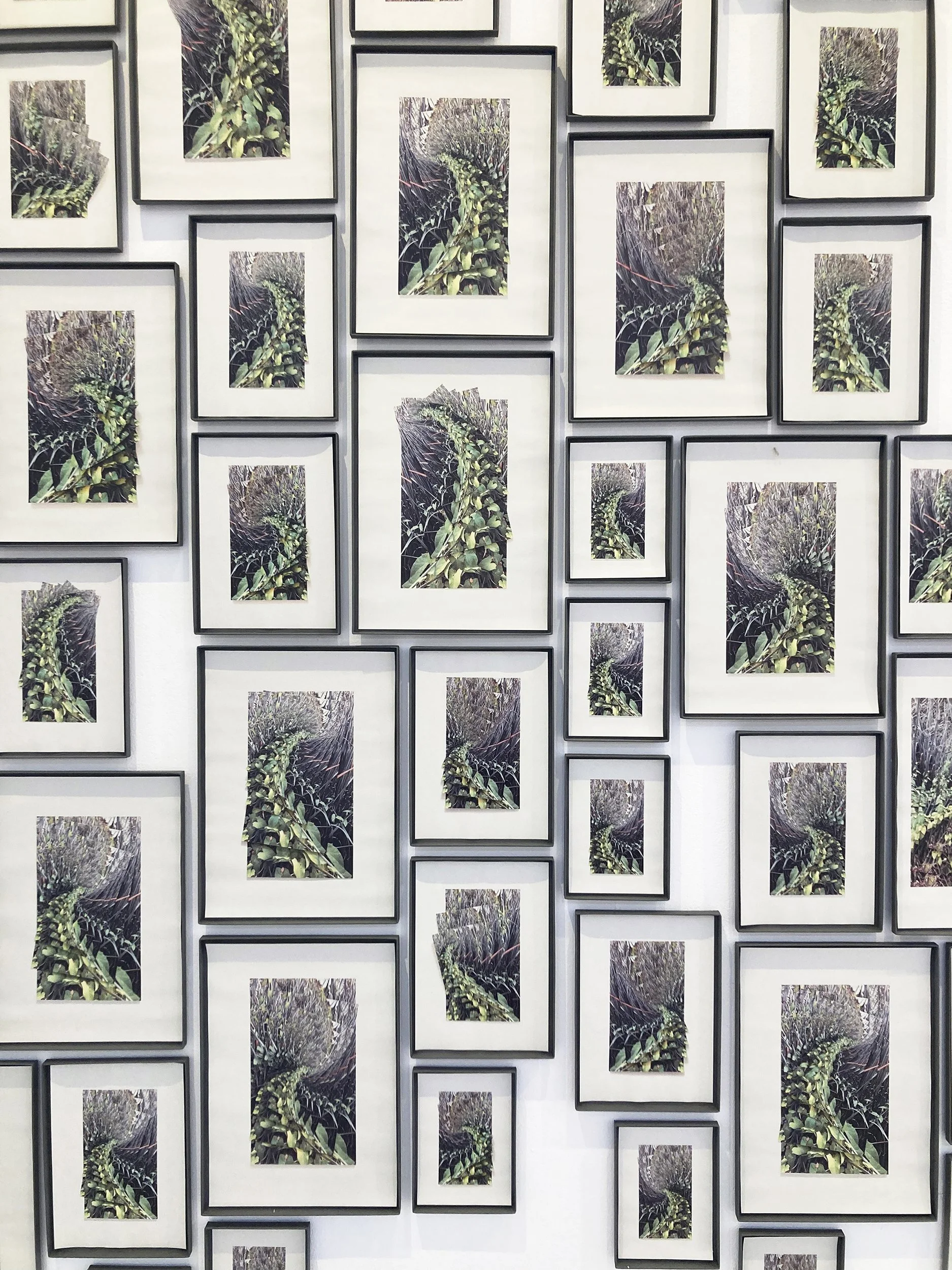
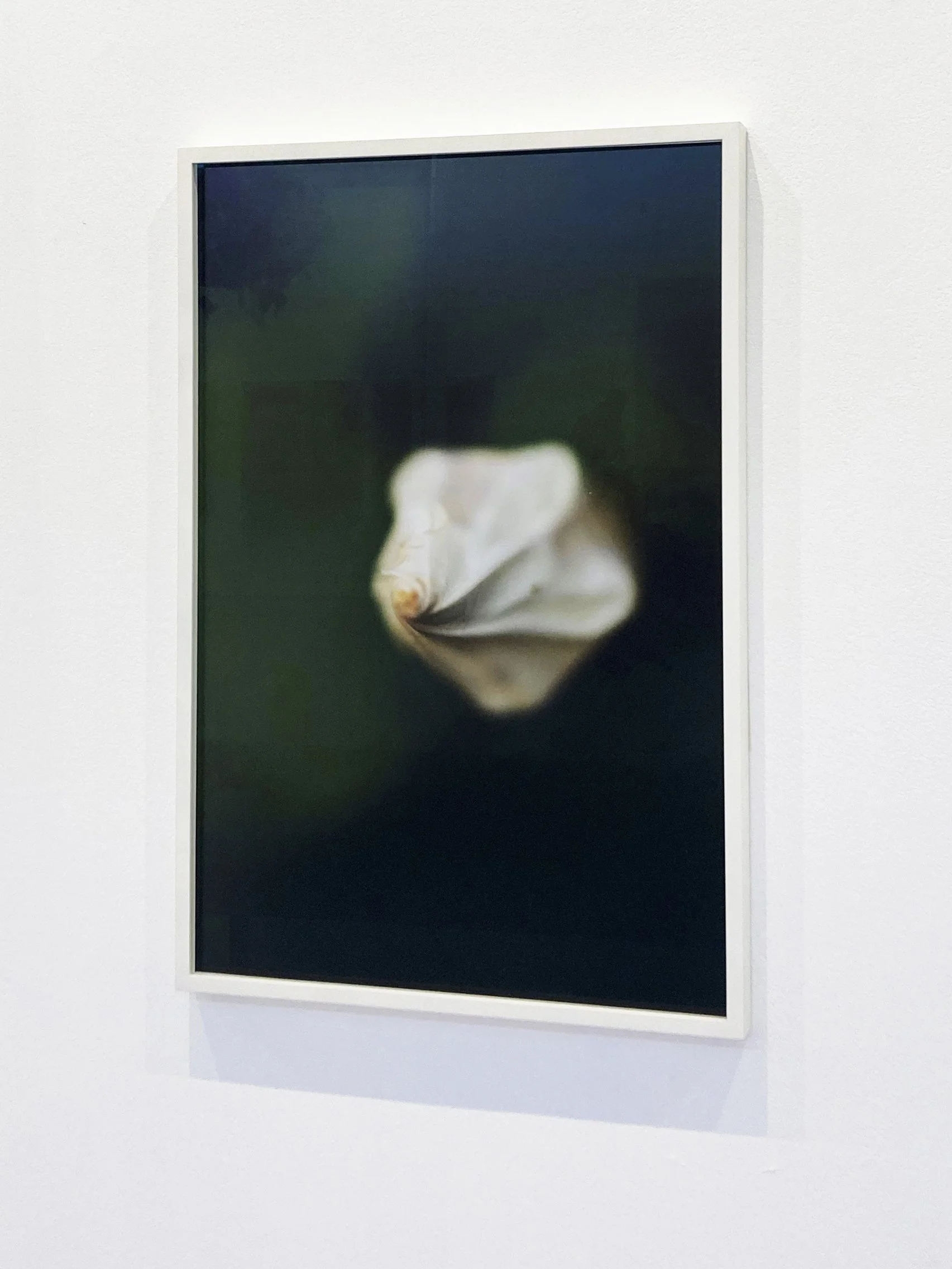
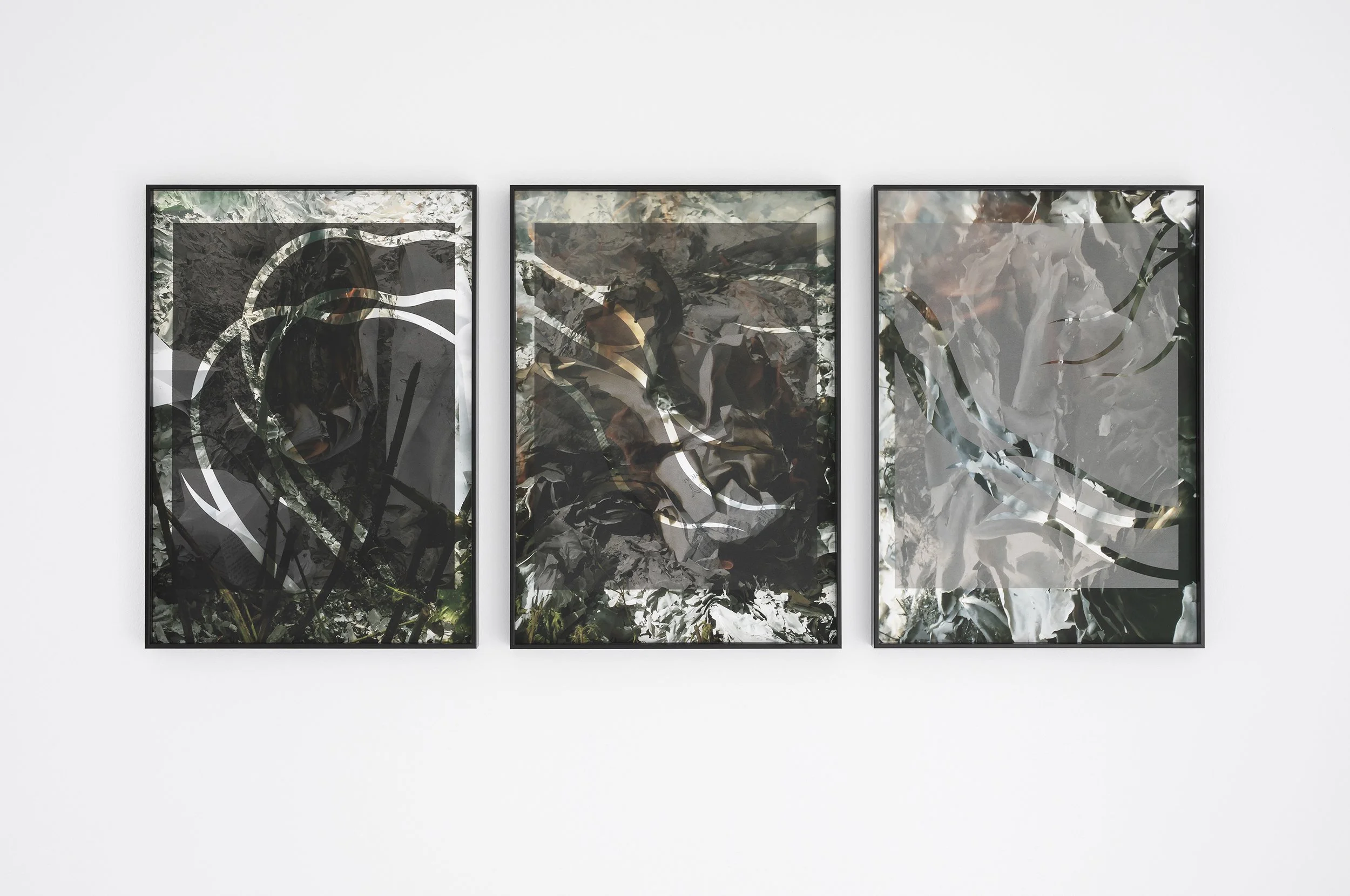
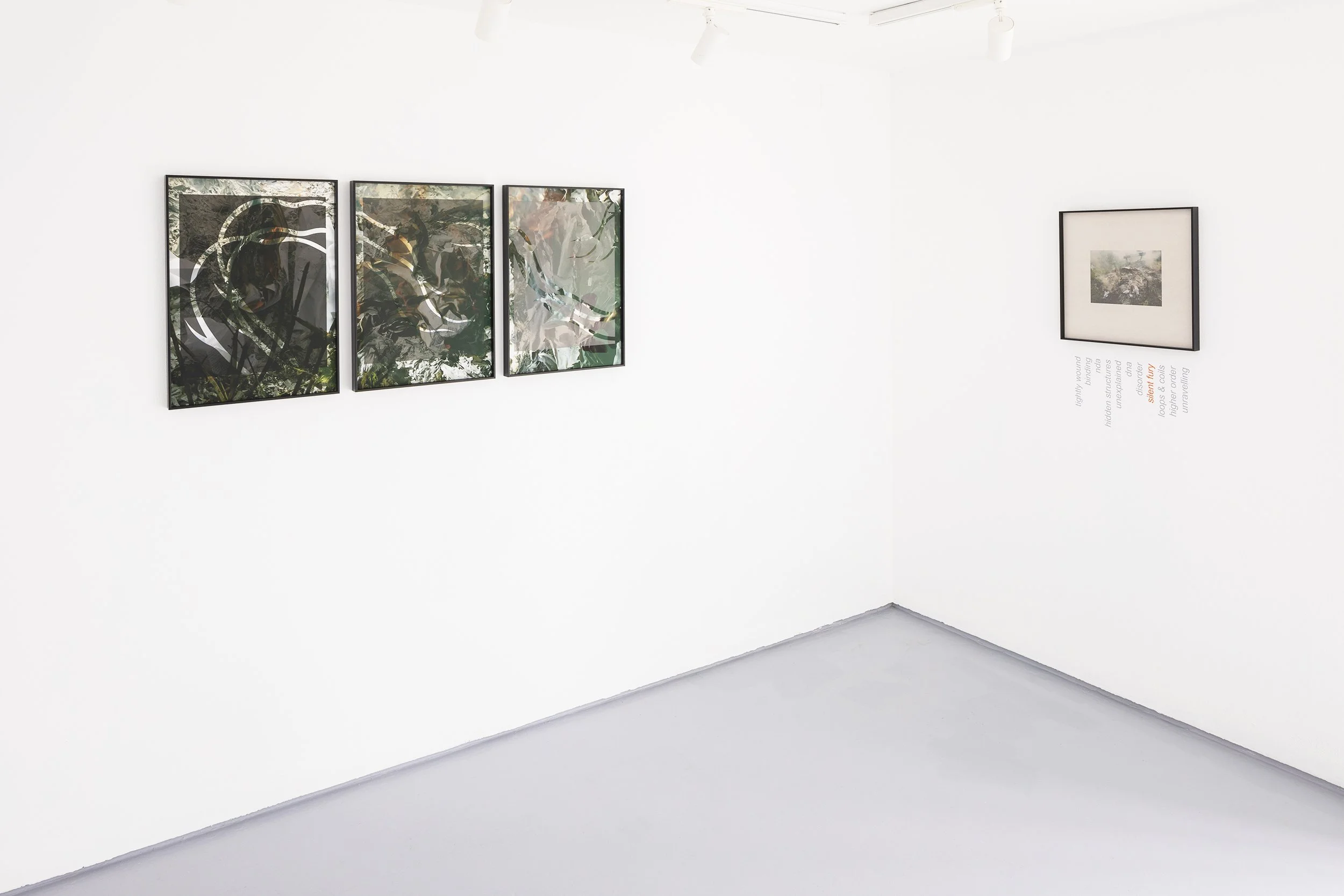
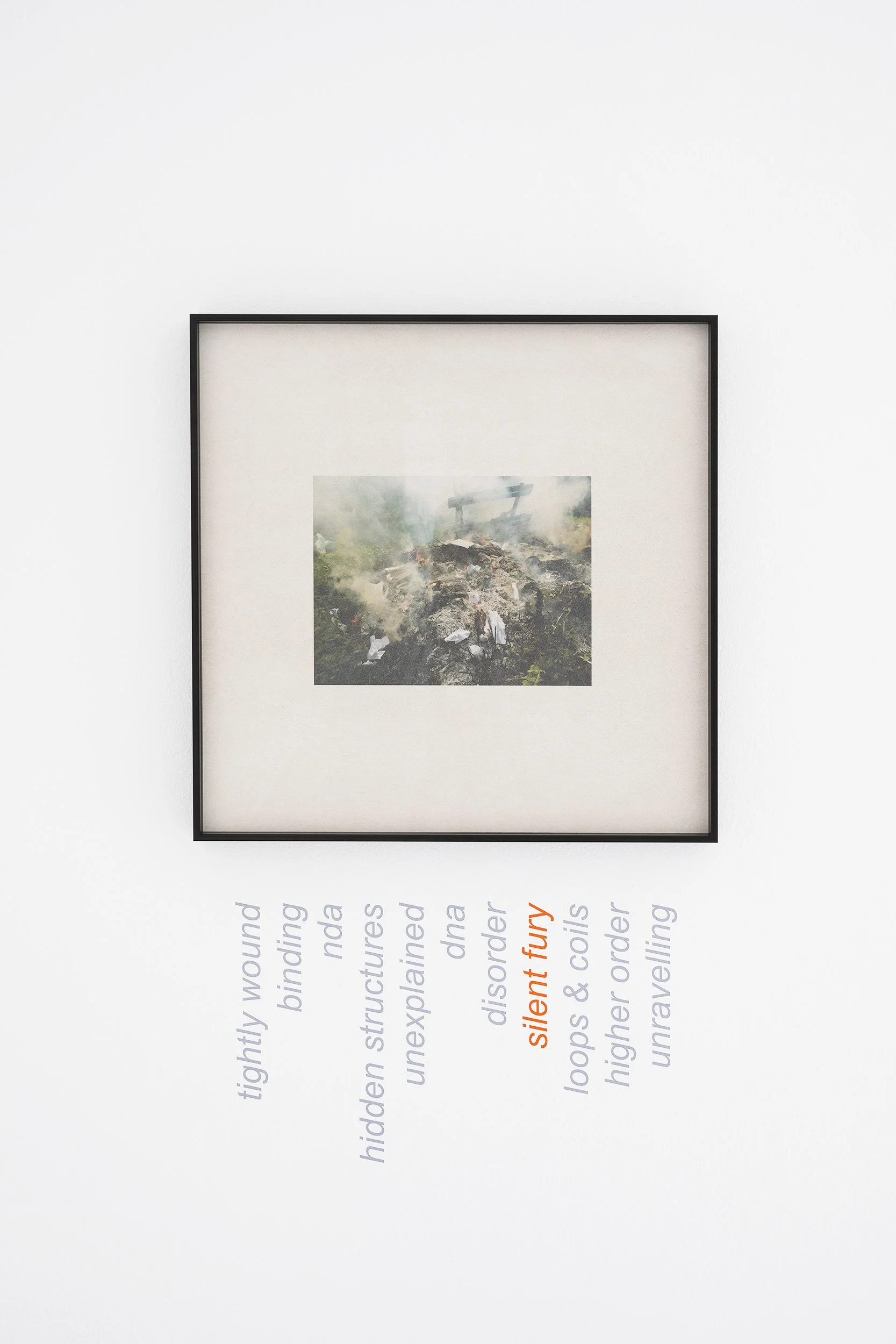
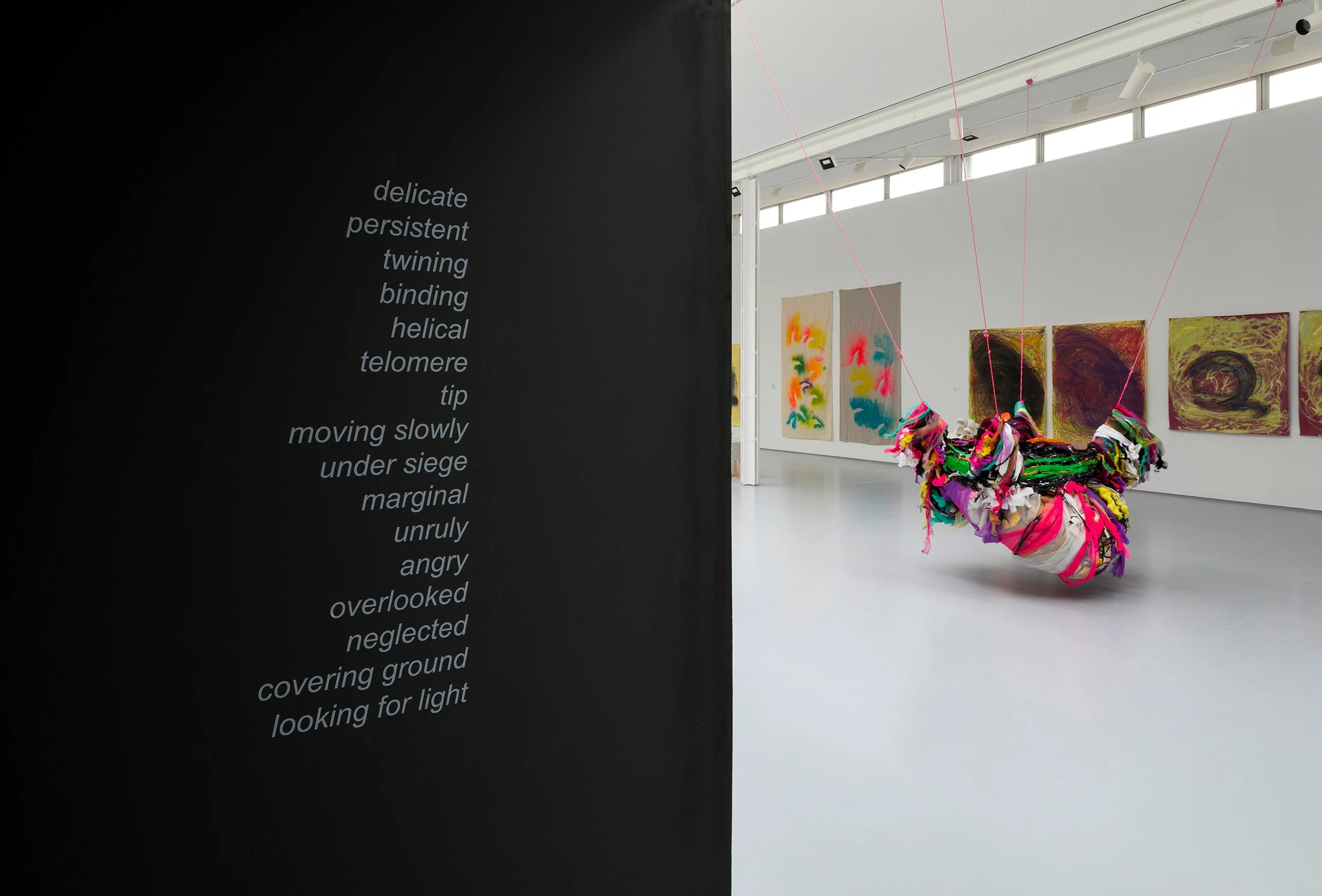
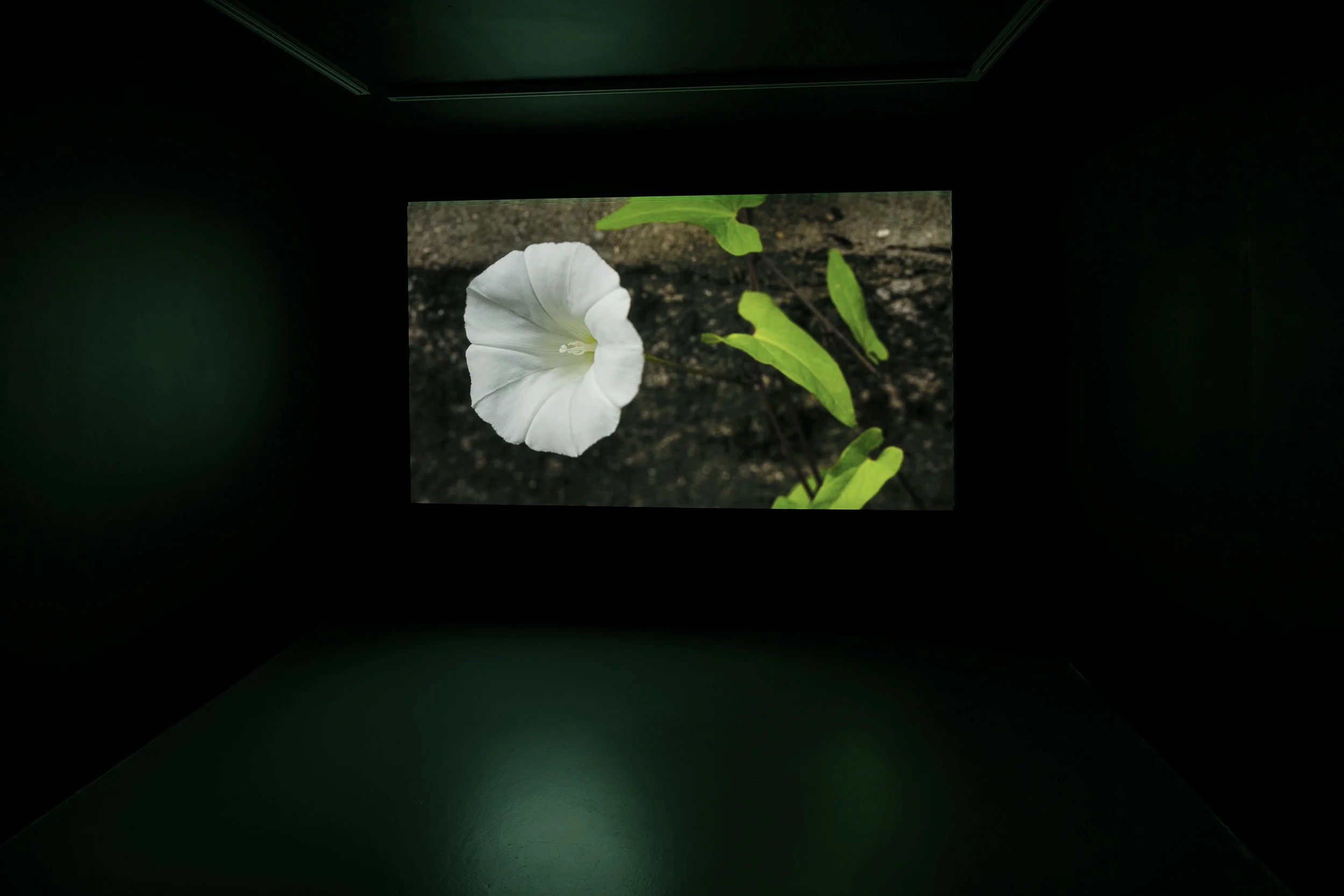
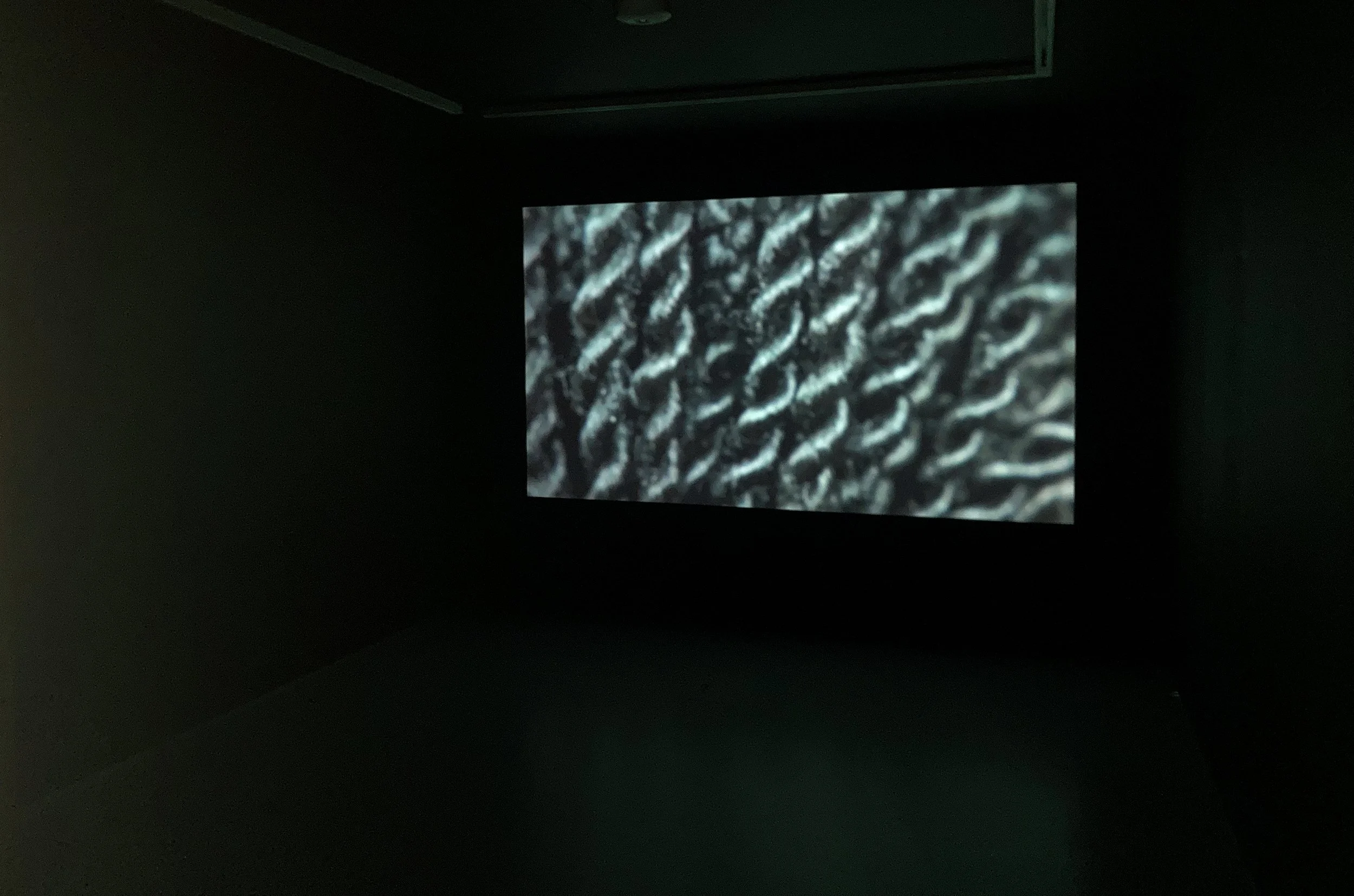
Works exhibited: A dangerous insinuation, wall vinyl, 9m x 4.5m; Pinnacle, 11 framed, tessellating photographs; Crip (we contain multitudes), 143 photographic collages in paper-covered boxes; Bud, photograph in white box frame; Silent fury, 4 pigment prints with ash silkscreen and vinyl wall text; and Here, Now, HD video for projection with vinyl wall text, 5.29, looped, no audio.
DCA exhibition page and events programme
Audio descriptions of the exhibition
Audio Exhibition Guide
Artist’s Choice Screening
Installation views Ruth Clark, courtesy of Dundee Contemporary Arts.
Image descriptions
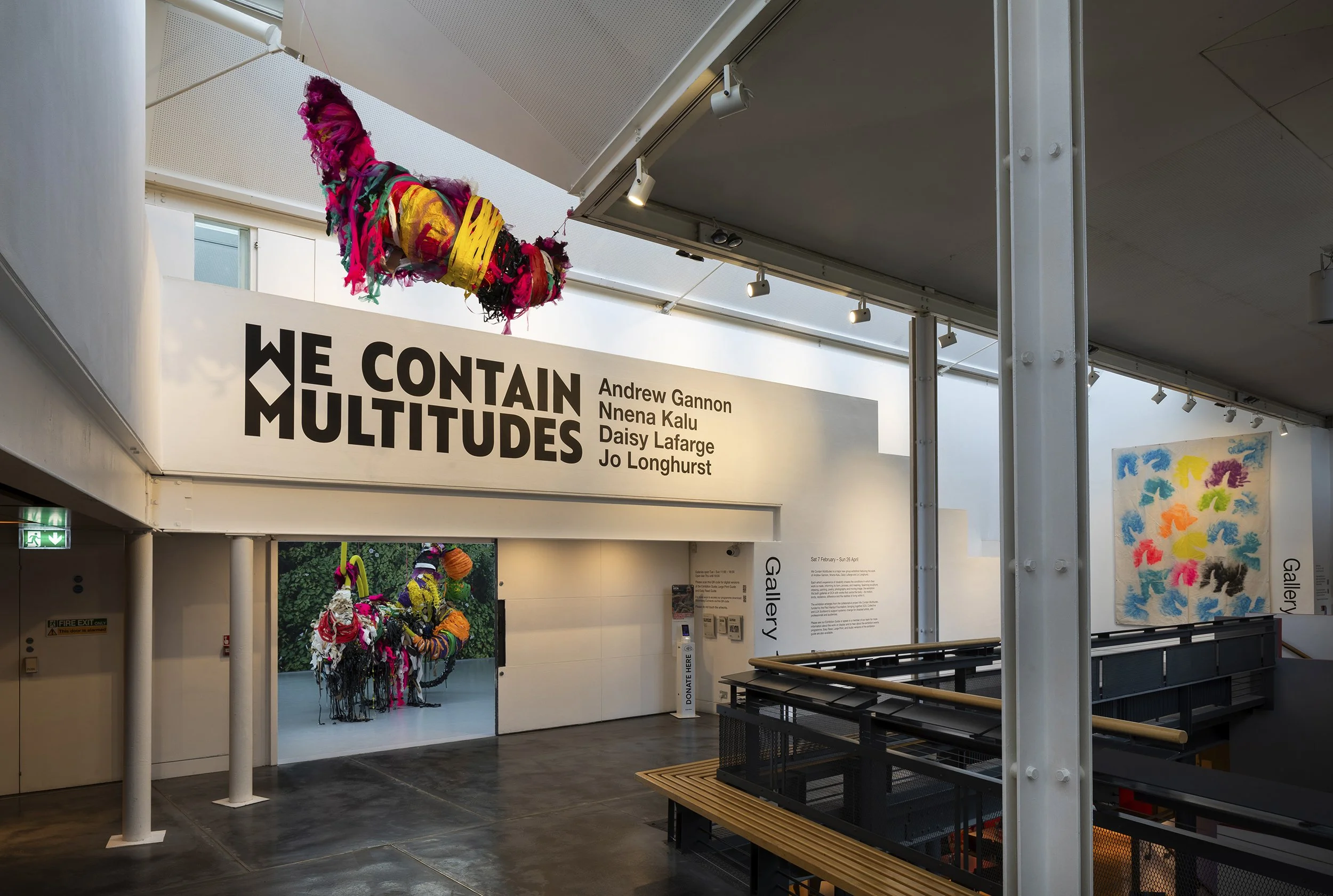
ID1: an image of the gallery entrance at Dundee Contemporary Arts. Brightly coloured sculptures by Nnena Kalu hang inside and outside the gallery. Through the doorway, behind Kalu’s sculpture, the wall is filled with the dark green bindweed wall vinyl by Jo Longhurst. Off to the right of the image, by the entrance to gallery 2 (out of sight), there is a large brightly coloured spray painting by Andrew Gannon.
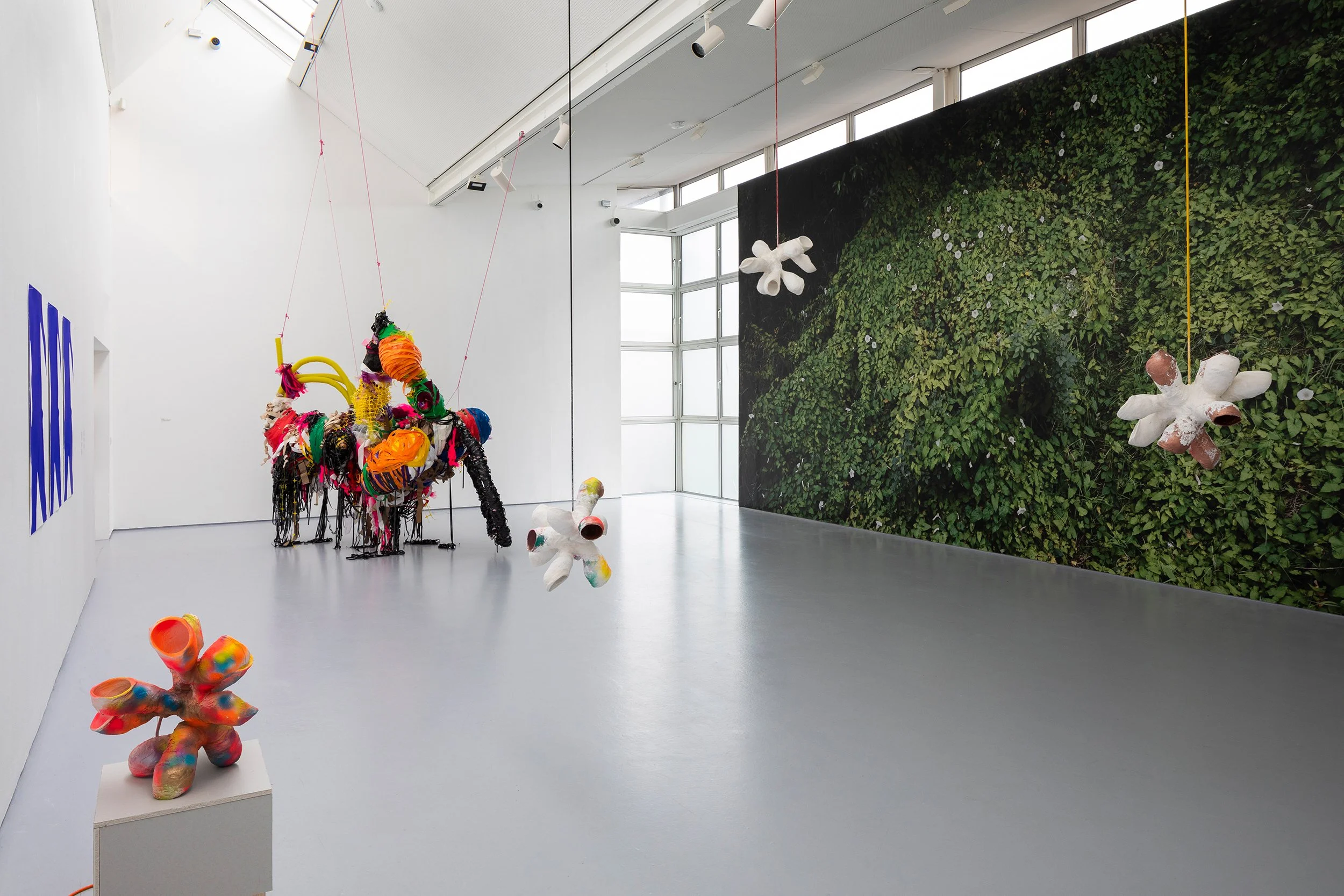
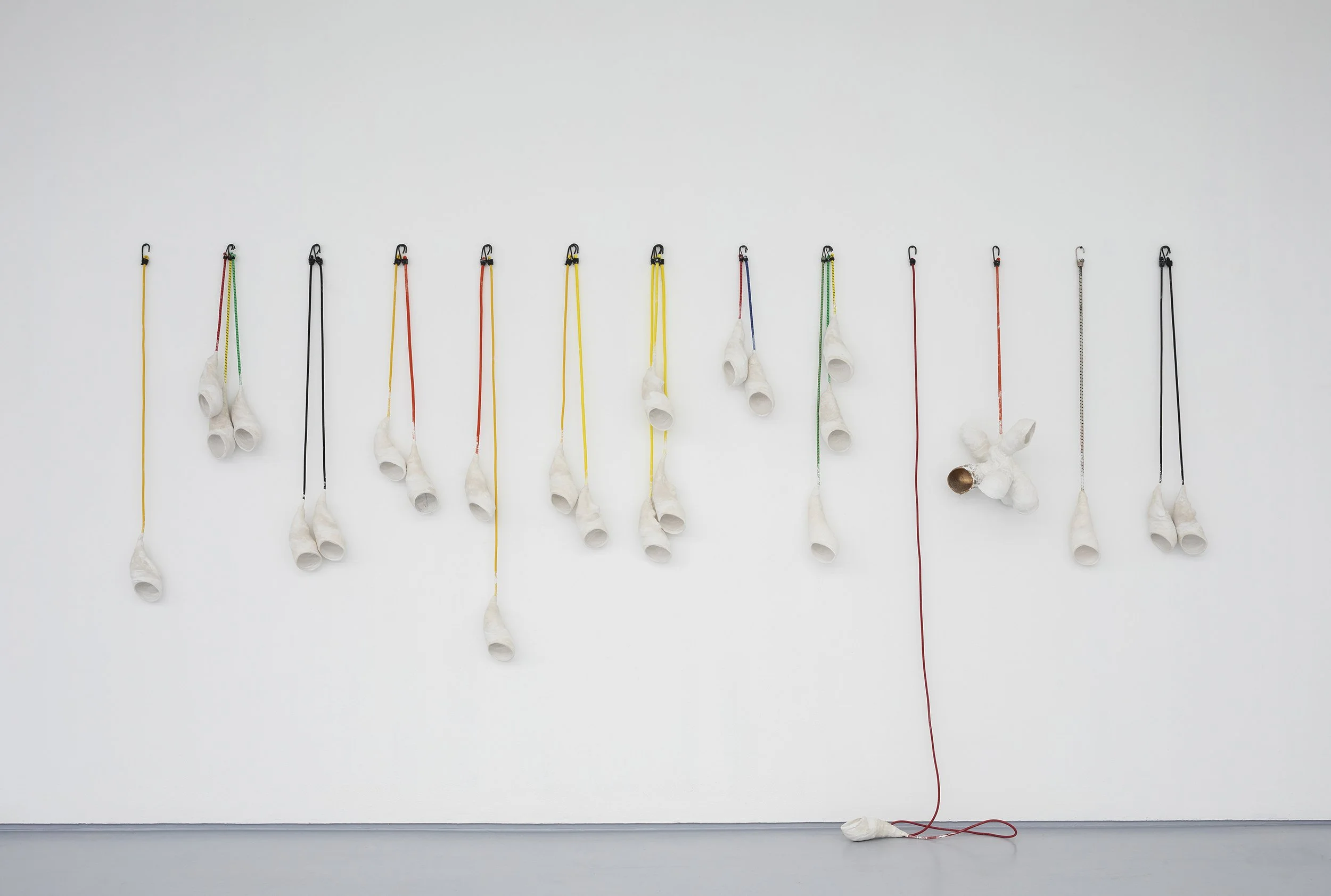
ID2: a view of Gallery 1: 3 bulbous white sculptures by Gannon, comprising clusters of plaster limb casts bound around a bungee cord, hang in front of A Dangerous Insinuation - a huge wall sized photograph of bindweed by Longhurst.
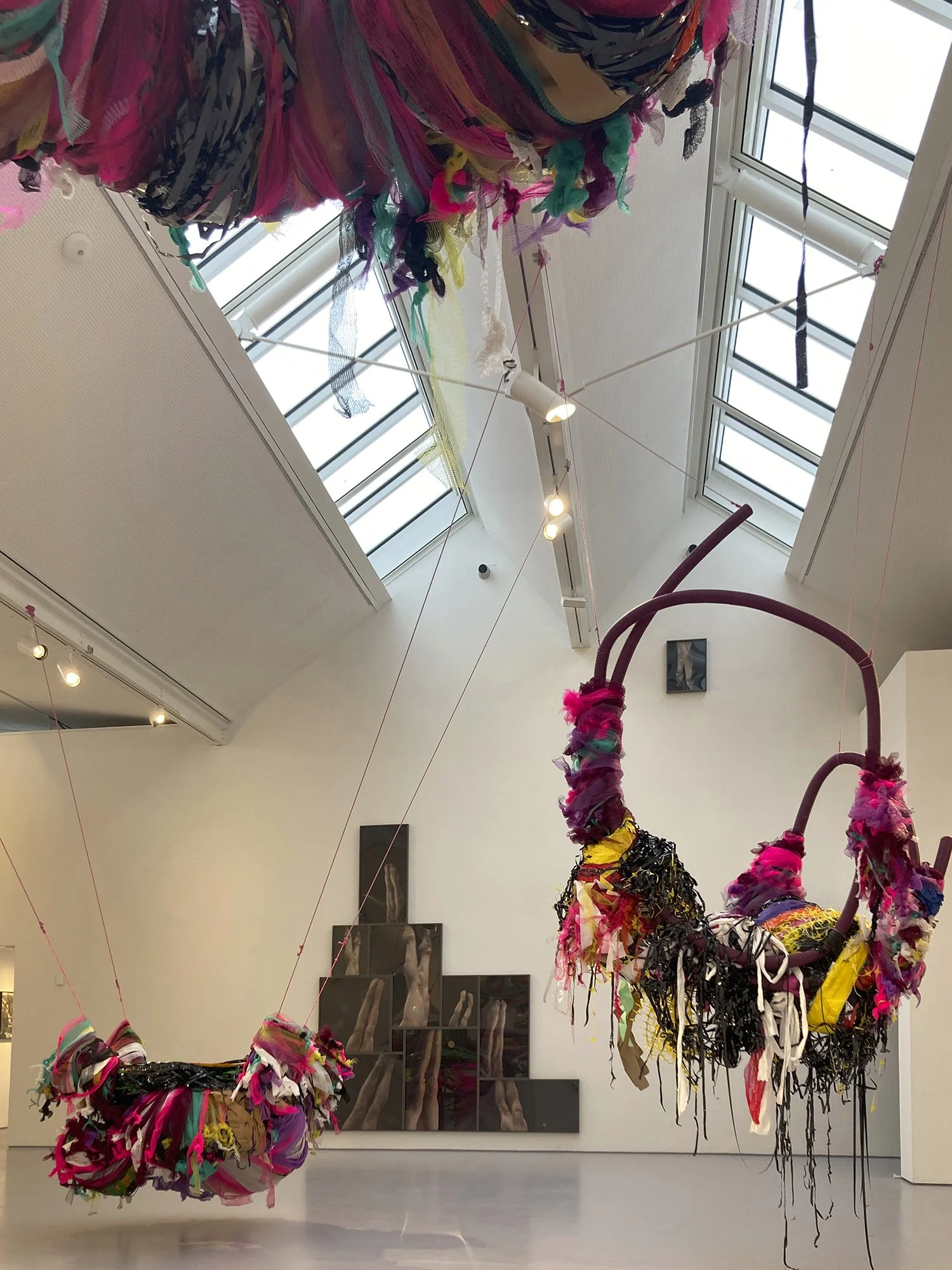
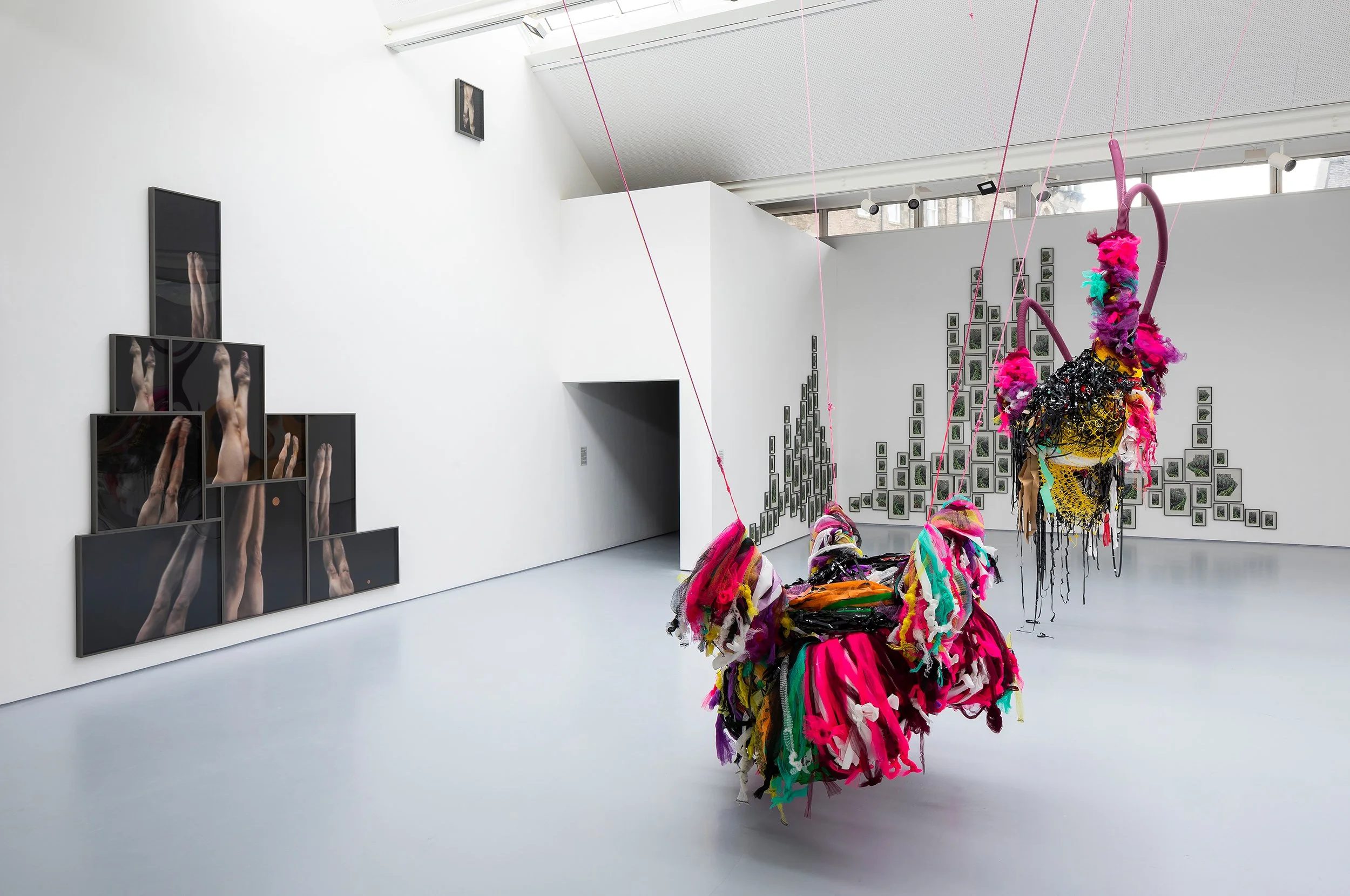
ID3: a view of Gallery 2: 3 multicoloured bound, wrapped sculptures by Kalu hang at various heights along the length the gallery. On the far wall is Pinnacle by Longhurst, a towering set of tessellating photographs of cropped gymnasts' legs, shooting toward the gallery eaves. At the peak of the gallery wall, framed by the purple tubing of one of the sculptures, is a single photograph of downward pointing legs.
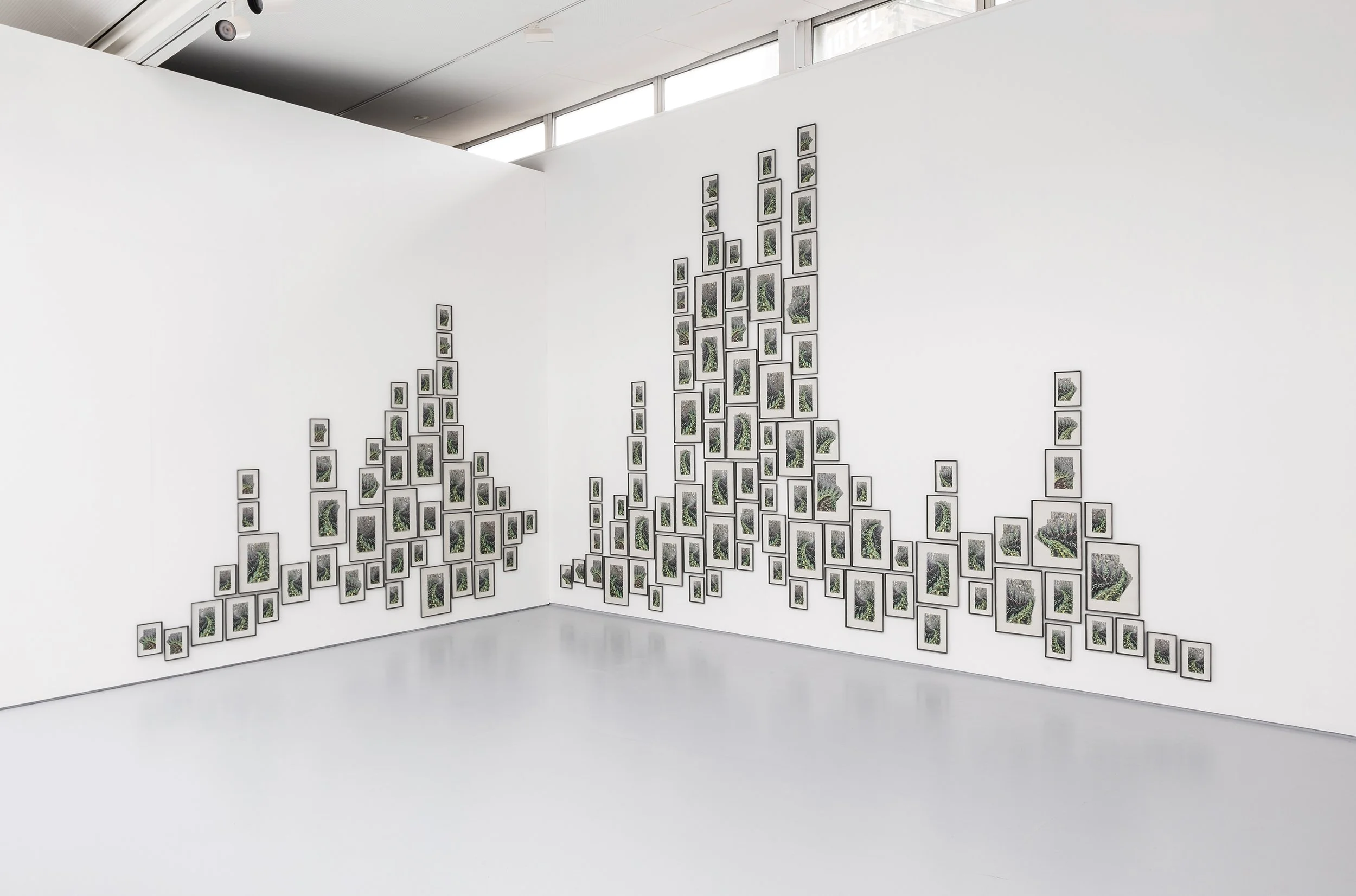
ID4: a view of Longhurst's Crip (We Contain Multitudes): 143 similar but different collages of a bindweed videostill float in shallow A3, A4 and A5 cardboard boxes. They are hung across a corner in Gallery 2, starting near the floor. They rise and fall in peaks, almost reaching the roof in one place.
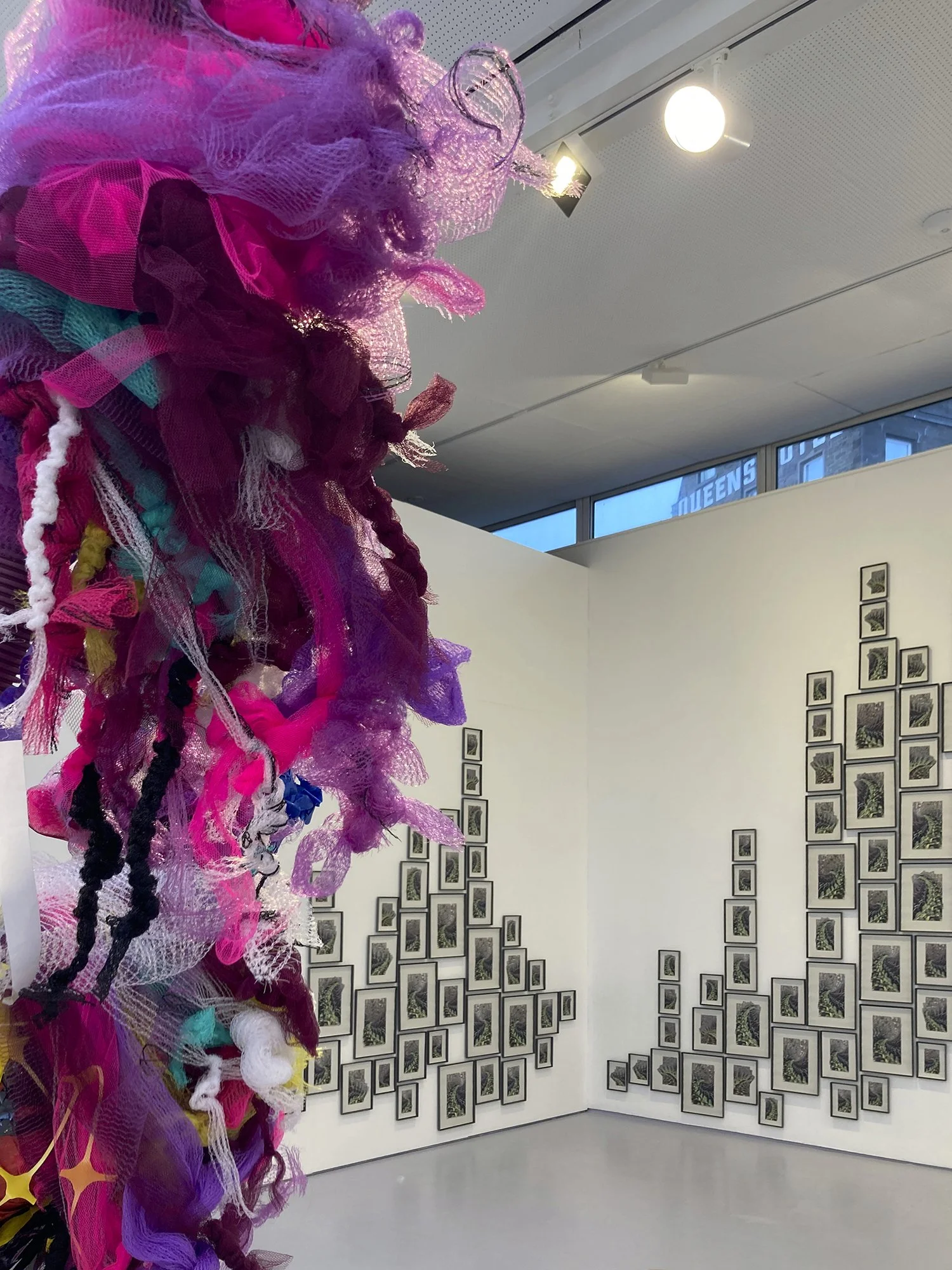
ID5: a cropped view of this collage installation. Olive green and lime yellow bindweed vegetation on a background of grey reeds and weeds is collaged in a spiralling motion in each box. The view onto the collages is framed by a flurry of pink, purple and turquoise fabrics, tapes and netting - a fragment of one of Kalu's sculptures.
ID6: a wider shot of Gallery 1, with a multi-coloured plaster cast by Gannon on a plinth in the foreground; the bindweed wall vinyl on the right; a Klein Blue triptych of silkscreen prints by Gannon on the left wall, and a large colourful bound low hanging sculpture by Kalu in the gallery entrance.
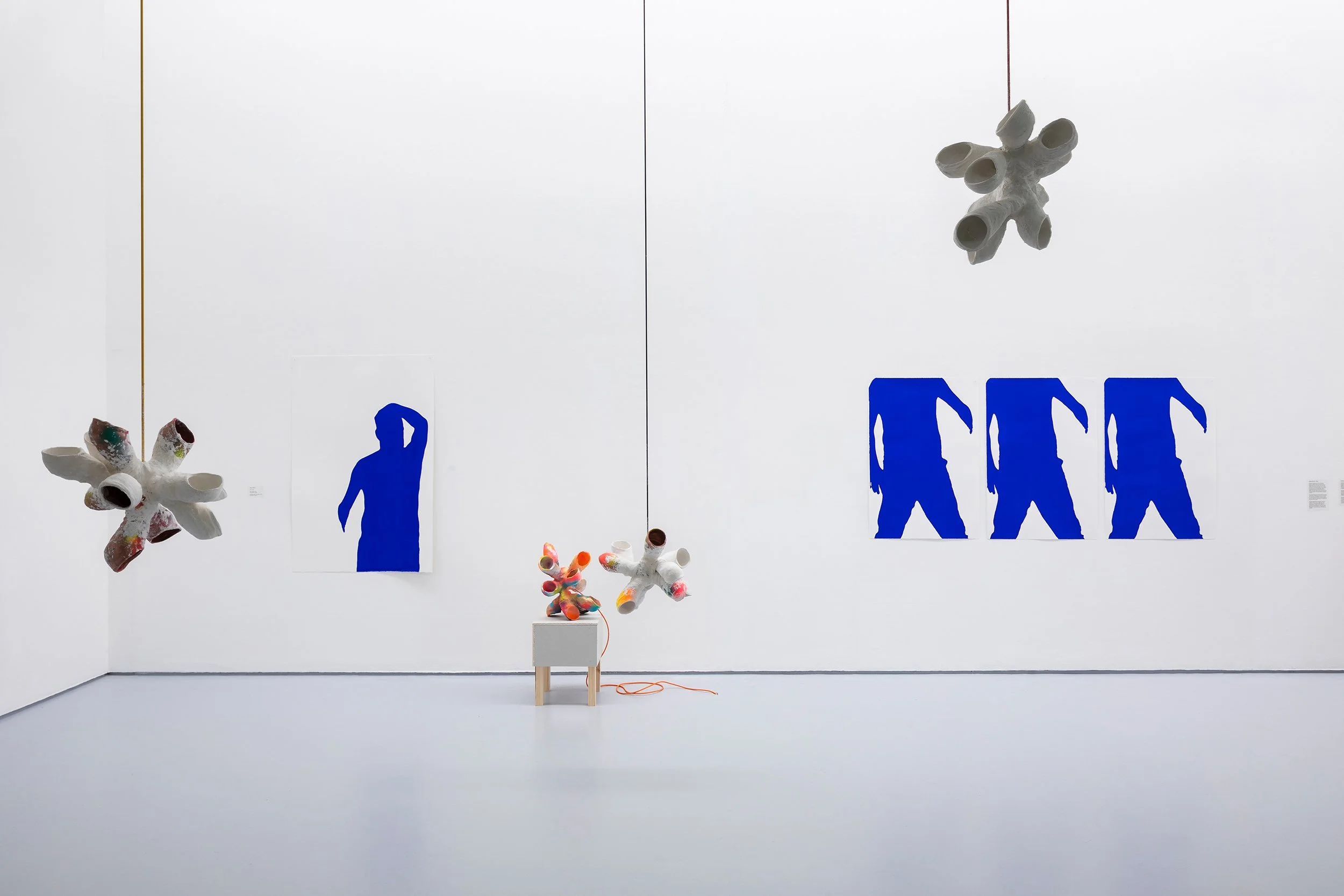
ID7: in the foreground 3 of Gannon's sculptures hang at different heights from bungee cord, further back the multi-coloured sculpture sits on a low plinth, an orange electrical cord comes out of the sculpture and plugs into the floor socket. On the wall behind, 2 large screen print works by Gannon. On the left “Men’s Health” a single silhouette portrait, on the right “Goofing on Elvis, “Hey Baby”.” A group of 3 silhouettes of Gannon's torso.
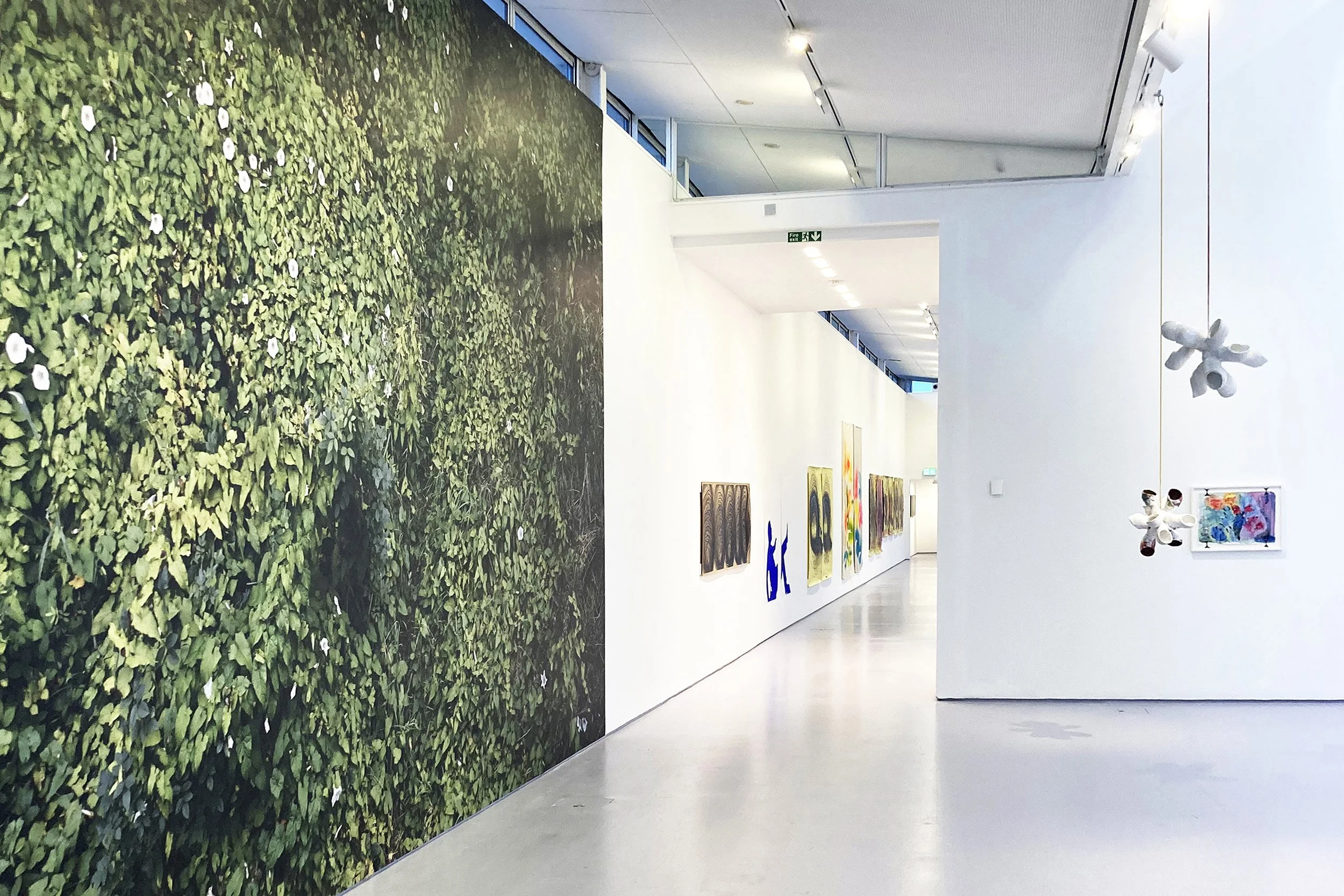
ID8: a view from the opposite direction with sightlines into Gallery 2. On the left the large bindweed wall vinyl, and in the distance a series of drawings and paintings by Kalu and Gannon. On the far wall of Gallery 1, a small painting by Daisy Lafarge behind two of Gannon's hanging sculptures.
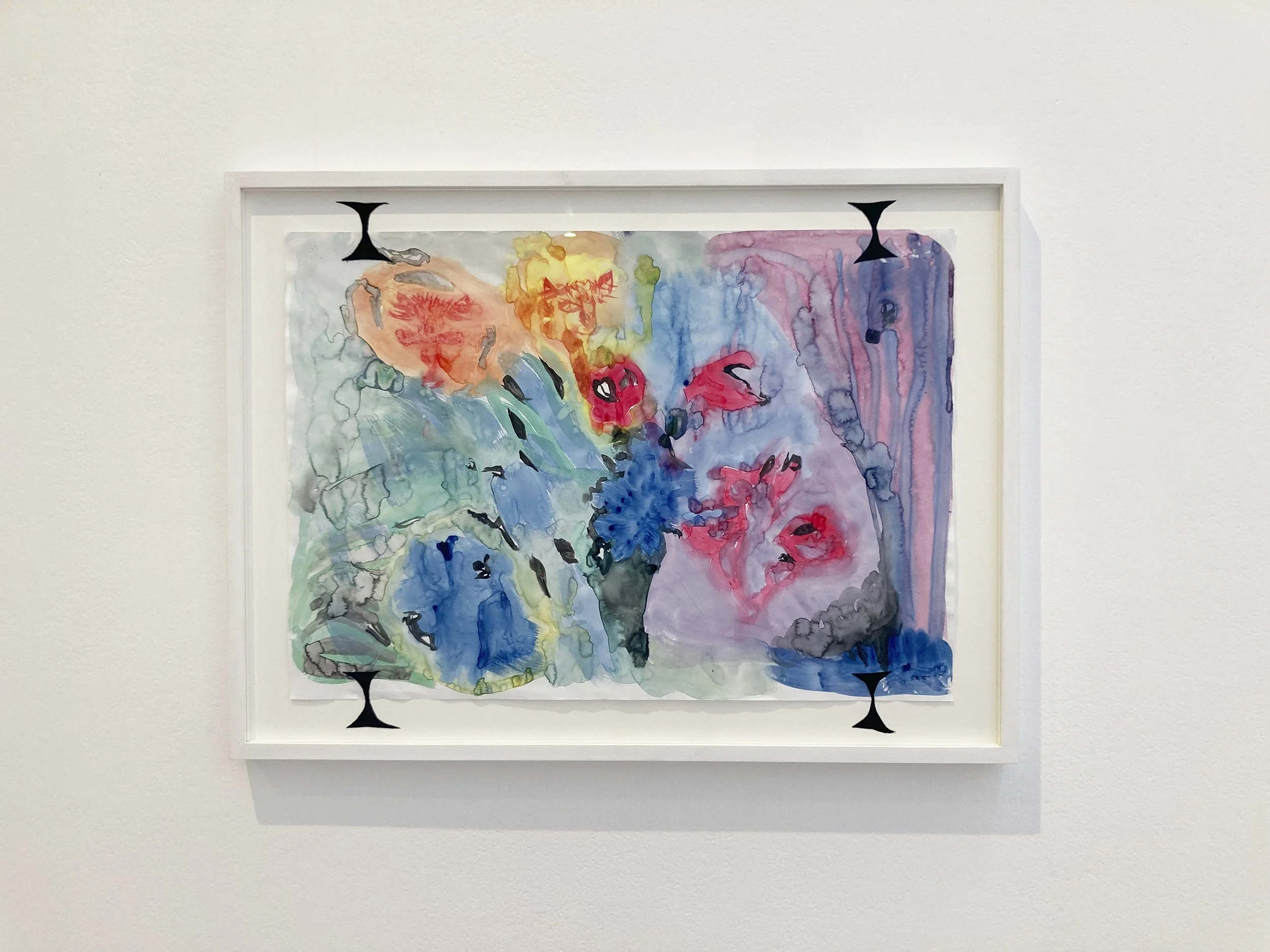
ID9: a close up of Lafarge's painting - a watery landscape that hints at animal and plant beings in blues, purples, orange, pink, yellow and red, held in the frame with black offcuts of kinesiology tape.
ID10: a wider view of Gallery 2. In the centre of the gallery hang 5 brightly bound sculptures by Kalu. On the long left wall hang 6 of Kalu's vortex drawings and 2 spray paintings by Gannon, with a series of limb cast plaster sculptures on plinths in front. At the far end, just seen, Longhurst's Pinnacle: 11 tessellating photographs of gymnasts' legs.
ID11: a view back to the corner entrance to the moving image gallery: on the left of the open doorway is Pinnacle - the 11th photograph hangs high up in the gallery eaves. On the right Longhurst's collage installation, Crip (we contain multitudes). In the foreground 2 brightly-coloured hanging sculptures by Kalu.
ID12: a close up view of the Crip (we contain multitudes) installation, showing an irregular grid of different-sized framed collages, each forming the impression of a twisting organic form. The collages twist in different directions but all spiral upwards.
ID13: 13 of Gannon's white plaster limb cast clusters hang in a row on yellow, red, green blue and black bungee cords. 1 has a golden interior.
ID14: a photograph in a chunky white box frame. Out of the darkest green-black background of the print emerges a blurry heart-shape in a dark olive-yellow-green. A soft, five-sided creamy white organic form appears off centre over the heart. It has a swirling pointed tip.
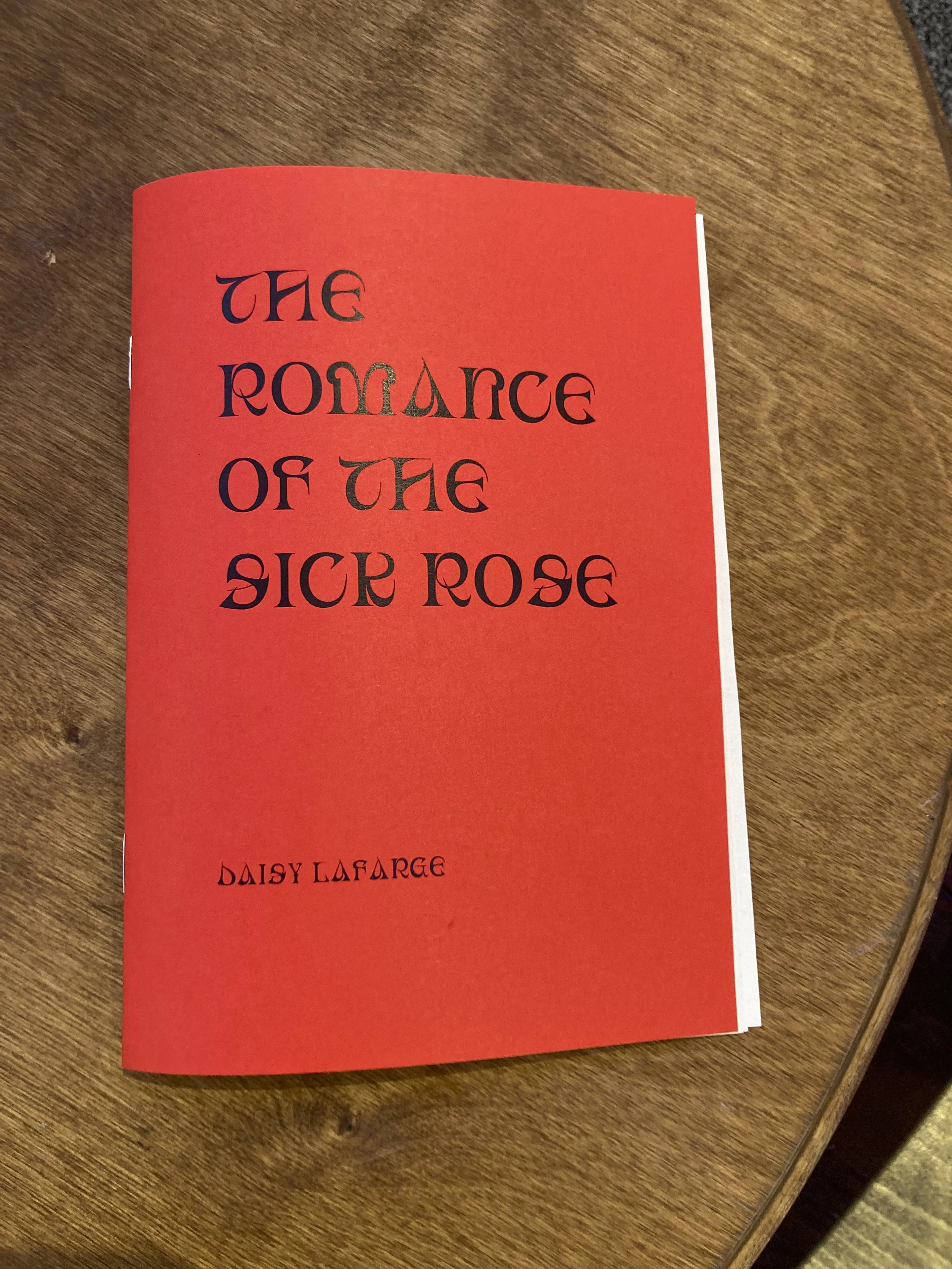
ID15: a wide view of Gallery 2. On the far wall, left to right, Longhurst's Crip (we contain multitudes) collage installation; Kalu's yellow triptych of vortex drawings; Longhurst's framed print of a white bindweed bud; and Gannon's white limb-cast plaster sculptures on coloured bungee cords. In the foreground, the green textured carpets of Lafarge's Sick Garden reading area, dotted with chairs, tables with her poetry pamphlet, a chaise long and a large floor cushion. Hanging in the centre of the gallery are 3 brightly bound textile sculptures by Kalu, and on the far back wall Longhurst's Pinnacle.
ID16: The cover of a red pamphlet on a wooden table top. It reads: The Romance of the Sick Rose, Daisy Lafarge.
ID17: In the foreground Lafarge's Sick Garden reading area. Hung on the wall behind are 7 almost abstract water colour paintings in delicate, but bright, watery colours. To the right, the corridor to Gallery 1 and Longhurst's large bindweed wall vinyl.
ID18: a closer view of this wall vinyl. In the foreground is Kalu's landscape drawing on brown paper of four vortexes in back, blue and white pencil.
ID19: a view of the same gallery wall from further away: Gannon's 2 brightly-coloured spray paintings made using the space around his left arm, with 2 plaster cast limb clusters on plinths in front; 2 more of Kalu's drawings on a yellow background and a glimpse of Lafarge's Sick Garden reading area with paintings hung on the wall behind. Gannon's blue silkscreen reclining body diptych can just be seen through the centre of Kalu's circular hanging twisted sculpture.
ID20: A triptych of colour pigment prints by Longhurst, showing close up details of a bonfire, over-screened with three shades of translucent ash. Cut outs of bindweed vines run across all three images, exposing details of the burning documents and weeds. The prints are hung in narrow black frames.
ID21: a view of the small gallery where the triptych is hung on the left. On the back wall a square framed print with a small image of the whole bonfire in the centre, over-screened with ash. There is some vinyl text on the wall below the framed print.
ID22: a closer view of the square framed print: a huge bonfire is surrounded by scorched weeds and billowing yellow smoke which obscures a large structure in the background. Flames can be seen licking at piles of charred papers and ash. The vinyl wall text runs vertically below the frame and reads: tightly wound, binding, nda, hidden structures, unexplained, dna, disorder, silent fury, loops & coils, higher order, unravelling. The text is all italic, in pale grey, apart from silent fury, which is in orange.
ID 23: The edge of a dark green, almost black, wall fills the left side of the image with a column of jagged, pale grey, italic wall vinyl text, justified parallel to the right edge of the wall. The text reads: delicate, persistent, twining, binding, helical, telomere, tip, moving slowly, under siege, marginal, unruly, angry, overlooked, neglected, covering ground, looking for light. On the righthand side of the image the long wall of Gallery 2 can be seen hung with two brightly coloured spray paintings by Gannon and a series of vortex-like drawings by Kalu.
ID24: an installation view of Longhurst's single channel moving image Here, Now, projected across the back wall of a small dark gallery. The view shows a fully open white bindweed flower, with its velvety, ribbed, single petal and stamen. Four long, pointy, bright green heart-shaped flowers cling to a dark magenta vine crawling across an urban pavement.
ID25: another view of the moving image gallery: vertical, twisting, dark braids fill the screen, spiralling from the top to the bottom of the projection.